Latest news
-
September 08, 2026
-
September 07, 2026
-
August 24, 2026
-
August 06, 2026
Mar. 25, 2026
Sudden cardiac arrest (SCA) is a medical emergency where the heart stops pumping blood effectively, often due to abnormal heart rhythms. When SCA occurs, quick action is essential, as survival rates drop by approximately 10% for every minute without defibrillation. In many cases, defibrillators play a critical role in saving lives by restoring normal heart rhythms through controlled electrical shocks. However, there are two primary types of defibrillators used in emergencies: Automated External Defibrillators (AEDs) and Manual Defibrillators.
This article will explore the differences between AEDs and manual defibrillators, highlighting their features, usage scenarios, and advantages. We’ll guide you through which device might be best suited for different environments and provide insights into why having the right defibrillator can make all the difference in an emergency.
An Automated External Defibrillator (AED) is a portable, life-saving device designed to treat people experiencing sudden cardiac arrest (SCA). It works by automatically analyzing the heart's rhythm and determining whether an electric shock (defibrillation) is needed to restore normal heart function. AEDs are easy to use and are intended to be operated by both trained and untrained individuals in emergency situations.
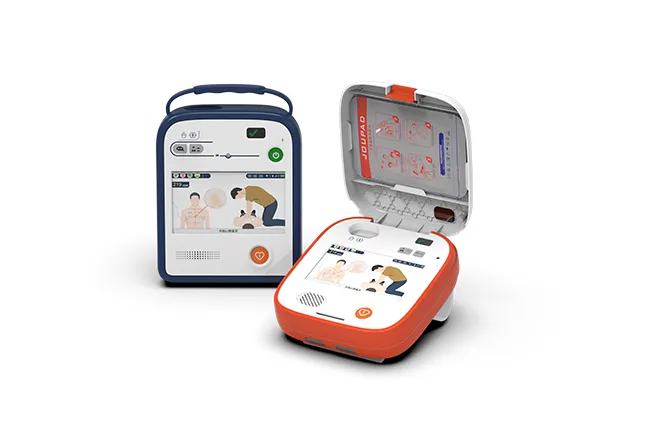
What sets an AED apart from other medical devices is its simplicity. Most AEDs provide clear, step-by-step voice prompts and visual instructions, guiding users through the process. The device automatically detects dangerous arrhythmias such as ventricular fibrillation (VF) and ventricular tachycardia (VT), and will only deliver a shock when necessary.
AEDs are designed to be used in public spaces and homes, making them accessible for non-medical personnel. This ease of use has led to widespread adoption in places such as airports, shopping malls, schools, gyms, and offices.
● Automatic Rhythm Analysis: The AED automatically analyzes the heart's rhythm and determines if a shock is necessary.
● Voice and Visual Prompts: Most AEDs provide clear audio instructions to guide the user step-by-step, making it easy for even bystanders with no medical training to use the device.
● Portable and Lightweight: AEDs are compact, portable, and designed for quick deployment.
● Safety Mechanisms: AEDs only deliver a shock if it’s determined to be necessary, reducing the risk of misuse.
● Ease of Use: Can be operated by anyone, even with no prior medical knowledge.
● Quick Access: Available in public places, ensuring immediate use in emergencies.
● Life-Saving: Significantly increases the survival chances of a person suffering from sudden cardiac arrest when used promptly.
The AED is designed for use by the general public, enabling bystanders to help save lives before emergency medical services arrive. When used promptly, AEDs can significantly increase survival chances, especially if used within the first few minutes of sudden cardiac arrest.
A Manual Defibrillator is a more advanced, complex device typically used by trained healthcare professionals, such as paramedics, doctors, or other medical staff. Unlike AEDs, which automatically analyze heart rhythms, manual defibrillators require the operator to assess the patient's heart rhythm and decide whether to deliver a shock.
Manual defibrillators are often used in hospitals, emergency medical services (EMS), and other professional healthcare settings. They provide more control over the treatment and can be adjusted according to the patient's condition. Manual defibrillators often allow for higher shock energy levels and the ability to synchronize shocks with specific types of arrhythmias.
● Manual Rhythm Interpretation: The operator must interpret the heart's rhythm and decide whether a shock is necessary.
● Higher Shock Energy Settings: Manual defibrillators can often deliver higher levels of shock energy, which may be required for certain patients.
● Versatility: Manual defibrillators can be used in various emergency situations, including cardiac surgery units, emergency rooms, and ambulances.
● More Complex Operation: Requires significant training to use effectively and safely.
● Control: Medical professionals can adjust the shock intensity and rhythm analysis as needed.
● Advanced Features: Manual defibrillators may have additional settings and capabilities, such as synchronization with the patient's heart rhythm for certain arrhythmias.
● Higher Energy Delivery: Capable of delivering higher shock doses, which can be necessary for certain medical conditions.
While these devices are effective in critical care situations, they require a significant level of training and experience to operate correctly.
● AED: Designed for use by non-medical personnel with minimal training. It provides clear instructions and automatically analyzes the patient's heart rhythm.
● Manual Defibrillator: Requires trained professionals to assess the heart rhythm manually and decide when and how to deliver a shock. These devices are often used in hospitals or by paramedics.
● AED: Automatically analyzes the patient’s heart rhythm and determines whether a shock is needed. The device provides guidance throughout the process.
● Manual Defibrillator: The operator must manually interpret the heart rhythm and decide whether a shock is needed, giving them more control over the treatment.
● AED: Compact, lightweight, and designed for use in public spaces or home settings. Its portability makes it ideal for emergency situations where medical personnel may not be immediately available.
● Manual Defibrillator: Larger and typically used in more controlled environments like ambulances or hospitals. It requires more space and setup than an AED.
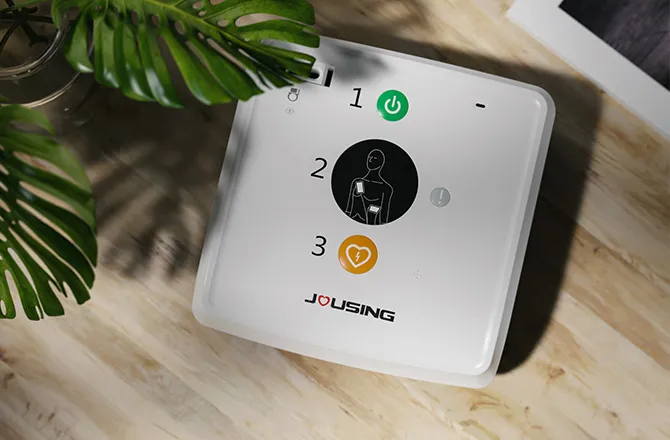
● AED: Typically delivers lower energy shocks that are suitable for most arrhythmias in the general population. It uses a preset shock level, making it safer for non-experts to operate.
● Manual Defibrillator: Offers higher levels of energy and the ability to adjust shock intensity depending on the patient’s needs. This makes it suitable for more complex cases but requires advanced knowledge to use effectively.
● AED: Can be used by anyone with basic first aid or CPR knowledge, as the device guides the user through the process.
● Manual Defibrillator: Requires specialized training to ensure proper use. Only trained medical personnel, such as doctors, paramedics, or advanced emergency responders, should operate manual defibrillators.
● Public Spaces: Airports, schools, gyms, and malls where access to trained medical personnel may be delayed.
● Home Use: For families or individuals who want to be prepared in case of a cardiac emergency.
● Untrained Responders: AEDs are designed for ease of use by non-medical personnel, making them suitable for bystanders during emergencies.
● Hospital Settings: Manual defibrillators are typically used in hospitals, cardiac care units, or emergency rooms, where trained professionals can provide detailed monitoring and customized treatment.
● Paramedic and EMS Use: Manual defibrillators are used by paramedics and emergency medical teams who have the expertise to assess the patient’s condition and adjust the shock levels as needed.
In emergency situations, the type of defibrillator available can be the difference between life and death. AEDs are ideal for public use, providing a quick, easy-to-use solution for those without medical training. They are widely available and effective in saving lives when used promptly. On the other hand, manual defibrillators are better suited for professional settings, offering advanced features and the ability to adjust shock levels for more complex medical conditions.
At Jousing Medical, we provide high-quality, user-friendly AED devices designed for fast deployment and reliable performance. Whether you need an AED for a public space, workplace, or home, our products offer the best in terms of safety, ease of use, and life-saving capabilities.

Latest news
September 08, 2026
September 07, 2026
August 24, 2026
August 06, 2026