Latest news
-
September 08, 2026
-
September 07, 2026
-
August 24, 2026
-
August 06, 2026
Mar. 17, 2026
Sudden cardiac arrest (SCA) occurs unexpectedly and can be fatal if not treated immediately. The window for survival is extremely narrow, and for every minute without defibrillation, the chances of survival drop by 10%. This stark reality has made automated external defibrillators (AEDs) indispensable in emergency medical response. AEDs provide a life-saving shock to the heart, which can restore its normal rhythm in cases of sudden cardiac arrest.
An automated external defibrillator (AED) is a compact, portable device that plays a crucial role in the immediate treatment of sudden cardiac arrest (SCA). It works by diagnosing abnormal heart rhythms and delivering an electrical shock to restore normal heart function. AEDs are primarily used in emergency situations and can be operated by bystanders with little to no medical knowledge, making them essential in places where medical personnel may not be immediately available.
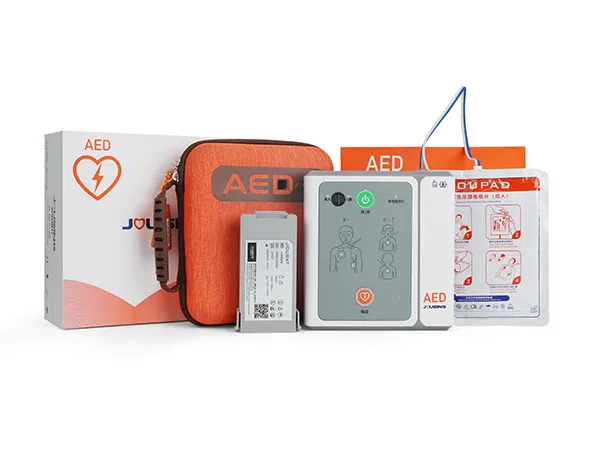
Sudden cardiac arrest (SCA) is a leading cause of death worldwide, with hundreds of thousands of cases occurring each year. Quick intervention is crucial, as survival rates decrease by about 10% with every passing minute without defibrillation. This makes the availability of life-saving equipment like automated external defibrillators (AEDs) essential in public spaces, workplaces, and even homes. AEDs are designed to be simple, portable, and effective, allowing even untrained bystanders to step in and save lives when every second counts. The simplicity and effectiveness of AEDs have made them a standard part of emergency response protocols in schools, airports, sports venues, and many other public places. AEDs have been proven to increase the chances of survival significantly when deployed promptly.
Sudden cardiac arrest is a medical emergency where the heart stops beating, leading to a loss of blood flow to vital organs, including the brain. The chances of survival decrease significantly with every passing minute without defibrillation. In fact, for each minute that passes without treatment, the survival rate drops by about 10%. This is where automated external defibrillators (AEDs) come in.
An AED provides immediate defibrillation, a key step in improving the survival odds for victims of sudden cardiac arrest. When combined with high-quality CPR, an AED increases the likelihood of survival by up to 70%, making it a critical piece of life-saving equipment.
An automated external defibrillator (AED) is equipped with sophisticated technology to automatically detect dangerous heart rhythms. Here's how it works:
1. Heart Rhythm Analysis: Once the AED's electrode pads are attached to the victim's chest, it automatically analyzes the heart's electrical activity.
2. Shock Delivery: If the device detects a rhythm that is shockable (such as VF or VT), it charges and delivers a controlled electric shock, which helps to restore normal heart rhythm.
3. Automatic Guidance: The device provides verbal instructions throughout the process, instructing the user when to administer CPR or when to deliver a shock, depending on the situation.
This technology allows the AED to be effective even in high-pressure situations, where quick intervention is crucial. AEDs have been shown to significantly improve survival rates when used within the first few minutes of a sudden cardiac arrest.
An AED works through a four-stage automated process that requires minimal input from the user:
Stage 1 — Pad placement and detection. When the electrode pads are attached to the patient's bare chest (one below the right collarbone, one to the lower-left side of the chest), the AED begins monitoring the heart's electrical activity in real time through the electrode sensors.
Stage 2 — Rhythm analysis. The AED's onboard processor automatically analyzes the heart rhythm to determine whether it is shockable (VF or pulseless VT) or non-shockable. This analysis takes approximately 5–15 seconds. The device instructs all bystanders to stand clear during this phase to avoid movement interference.
Stage 3 — Shock delivery. If a shockable rhythm is detected, the AED charges its capacitor and either instructs the user to press a shock button (semi-automatic AED) or delivers the shock automatically (fully automatic AED). The shock depolarizes the heart muscle, interrupting the chaotic electrical activity and allowing the heart's natural pacemaker to re-establish a normal rhythm.
Stage 4 — CPR guidance. After the shock, or if no shockable rhythm is detected, the AED provides audio-guided instructions for performing CPR — typically two minutes of compressions — before re-analyzing the heart rhythm and repeating the cycle as needed until emergency medical services arrive.
Modern AEDs also use biphasic waveform technology, which delivers the electrical shock in two phases (positive then negative direction), allowing effective defibrillation at lower energy levels, reducing the risk of myocardial damage compared to older monophasic devices.
Understanding the main hardware components helps users feel more confident operating the device:
Electrode pads (defibrillation pads): Self-adhesive pads placed on the patient's chest that serve dual functions — reading the heart's electrical signals and delivering the defibrillation shock. Adult pads are typically used for patients over 8 years of age or 25 kg. Pediatric pads or a pediatric attenuator key are used for children under 8 to reduce shock energy to an appropriate level.
Battery: Powers the device for continuous self-testing, voice prompts, and shock delivery. AED batteries typically last 2–5 years in standby and are designed to be replaced as a routine maintenance item.
Onboard processor / ECG analysis module: The computational core that interprets the patient's heart rhythm, determines shockability, and controls shock delivery. The accuracy of this module is central to the device's clinical performance.
Voice prompt and display system: Modern AEDs provide clear, step-by-step audio instructions and, on many models, a visual display screen or LED indicators. Some advanced models also provide real-time CPR feedback — coaching the rescuer on compression depth and rate.
Shock delivery circuit (capacitor): Stores electrical energy and discharges it as a controlled, calibrated shock when triggered.
These components are designed to work seamlessly together to ensure that the AED is ready when you need it most.
Today’s AEDs are designed to be both effective and user-friendly. Here are some key features:
● Pre‑programmed Instructions: Modern AEDs come with pre‑programmed instructions that guide the user through every step of the process.
● Shock Advisory System: Only administers a shock if needed, ensuring that the patient is not harmed.
● Portable and Durable: Most AEDs are lightweight, compact, and easy to store, making them ideal for public spaces and homes.
These advancements ensure that an AED can be deployed quickly and effectively, even in high-pressure environments.
AEDs are specifically designed to be operated by people with no medical background. The built-in voice guidance system walks the user through every step, and the automatic rhythm analysis means the device will not deliver a shock unless one is genuinely needed — there is no risk of accidentally harming someone whose heart is beating normally.
That said, formal CPR and AED training is strongly recommended for anyone who may be in a position to respond to a cardiac emergency — employees in workplaces with AED programs, school staff, sports coaches, and community volunteers. Training builds confidence, reduces response time, and ensures users can effectively combine AED use with high-quality CPR, which together offer the best chance of survival.
CPR and AED certification courses are offered by the American Heart Association (AHA Heartsaver and BLS programs), the European Resuscitation Council (ERC), the British Red Cross, St. John Ambulance, and equivalent organizations globally. Most certification courses are valid for two years and can be completed in a half-day or full-day session, with blended online and in-person formats widely available.
In most jurisdictions, Good Samaritan laws protect bystanders who use an AED in good faith during a cardiac emergency from civil liability — even if the outcome is not successful. These legal protections are designed to encourage public bystander response without fear of legal consequence.
Automated external defibrillators (AEDs) are increasingly available in public spaces where the risk of sudden cardiac arrest is higher. These include:
● Airports and Train Stations: High foot traffic areas where the occurrence of sudden cardiac events is more likely.
● Shopping Malls and Gyms: Locations where people are physically active and may be at higher risk for heart problems.
● Office Buildings and Schools: In workplaces and educational institutions, having an AED can be crucial in emergencies.
● Sports Events and Stadiums: Places with high-energy activities and large crowds, increasing the likelihood of a cardiac incident.
Having an AED in these locations dramatically improves the chances of survival. Studies show that when a defibrillator is used within the first few minutes of a cardiac arrest, survival rates can rise as high as 70%.
When it comes to choosing an automated external defibrillator (AED), the quality and reliability of the device are paramount. At Jousing Medical, we offer AEDs that are not only easy to use but are also designed with the latest technology to ensure optimal performance in emergencies. Here’s why you should choose Jousing AEDs:
● User-Friendly Design: Our AEDs come with clear audio and visual instructions, making it easy for anyone to use, even without prior medical training.
● Compact & Portable: Lightweight and durable, Jousing AEDs are perfect for both public spaces and home use.
● Advanced Safety Features: Our devices include a shock advisory system, ensuring that a shock is only delivered if necessary, and a self-test function that guarantees the device is always ready for use.
● Reliable Performance: With a robust battery and high-quality components, Jousing AEDs provide dependable performance when every second counts.
At Jousing Medical, we are committed to saving lives by providing accessible, reliable AED solutions. Trust our devices to protect those who matter most, whether at work, school, or in the community.
Using an AED is straightforward. Here’s a step-by-step guide to help you understand how easy it is to operate:
1. Turn On the Device: Open the AED and press the power button.
2. Attach the Pads: Place the adhesive electrode pads on the victim’s bare chest, as instructed by the device.
3. Analyze the Heart Rhythm: The AED will analyze the heart’s rhythm to determine if a shock is necessary.
4. Deliver the Shock: If the device determines that a shock is needed, it will automatically charge and instruct you to press a button to deliver the shock.
5. Follow Instructions for CPR: If the AED advises CPR, follow the audio prompts until emergency medical services arrive.
Thanks to the clear voice prompts and visual aids, even those with no medical training can confidently use the device to help save a life.
At Jousing Medical, we believe in empowering individuals and organizations with the tools they need to save lives. Our AED devices are designed for ease of use, reliability, and quick deployment in any emergency. Choose Jousing Medical for peace of mind, knowing that our devices provide reliability, ease of use, and critical life-saving capabilities.

Latest news
September 08, 2026
September 07, 2026
August 24, 2026
August 06, 2026