Related Products


Oct. 09, 2026
The need for immediate access to an Automated External Defibrillator (AED) in emergency situations cannot be stressed enough. Whether in public places like shopping malls or workplaces, the presence of public AEDs can be a lifesaver during cardiac emergencies. However, questions about their accessibility, safety, and efficiency often arise. In order to make an informed decision, it is essential to navigate through the advantages and disadvantages presented by public AEDs, so that communities can enhance their emergency response effectiveness.
One of the most compelling advantages of public AEDs is their potential to save lives. According to research, the use of an AED can increase the survival rate of a cardiac arrest victim by as much as 25%. Rapid access to a defibrillator within the first few minutes of a cardiac event is crucial; data reveals that each minute without CPR and defibrillation decreases survival chances by up to 10%. Public AEDs, strategically placed and easily accessible, ensure that help is never more than a few steps away.
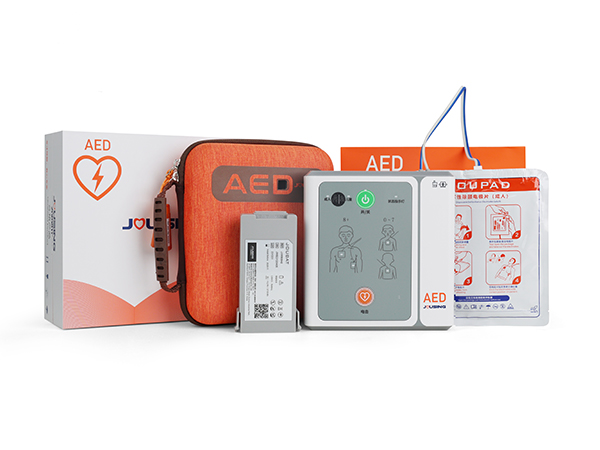
Moreover, the user-friendliness of modern AEDs, such as those provided by Jousing Medical, makes them accessible for laypersons. Studies show that approximately 95% of people can successfully use an AED on the first attempt. Furthermore, many models are equipped with visual and verbal prompts, guiding users through the process. In community settings, the implementation of public AEDs has resulted in a documented 40% increase in emergency response confidence, empowering citizens to act during critical situations.
Consider a recent case in a city park where a public AED was available. In only 2 minutes and 30 seconds, a bystander utilized the AED, resulting in the immediate revival of a 45-year-old man who had collapsed. This reinforces the notion that public access to AEDs not only saves lives but does so efficiently. The average time it takes for emergency medical services (EMS) to arrive on the scene is approximately 8 minutes, making those crucial moments prior to professional assistance all the more vital.
While public AEDs provide significant benefits, they are not without drawbacks. A common concern is the potential for misuse. For example, improper use or tampering can lead to malfunctions. Research indicates that about 7% of public AEDs are not in working order at the time of an emergency. Communities must implement regular maintenance and inspections to address this issue. One suggested practice is to schedule monthly checks of all public AEDs to ensure their operational status.
Moreover, while AEDs are designed for ease of use, lack of knowledge among potential users remains a hurdle. Approximately 70% of bystanders feel uncertain about operating an AED during an emergency. Public awareness campaigns are vital; communities can increase knowledge and confidence through training sessions. For example, organizations can collaborate with local health departments to host free workshops, showing how to use AEDs effectively and alleviate user hesitation.
Considering the lifesaving advantages and the potential challenges, using public AEDs generally outweighs the drawbacks, particularly in high-traffic areas where cardiac events are more likely to occur. With survival rates significantly boosted by immediate AED access, communities are encouraged to invest in these devices. Additionally, the presence of public AEDs can foster a culture of safety and preparedness among residents, ultimately saving lives during critical situations.
Public AEDs are particularly beneficial for large gatherings such as festivals, sporting events, shopping centers, as well as workplaces with high foot traffic. They serve as a proactive measure in enhancing community safety. When equipped with proper training and knowledge, community members are more empowered to utilize these life-saving devices. It is advisable for organizations, schools, and facilities to evaluate their safety protocols and consider investing in public AEDs as part of an integrated emergency response plan.
Q1: How often should public AEDs be inspected?
A1: Public AEDs should be inspected at least once a month to ensure they are in working order and fully stocked with necessary accessories.
Q2: Can anyone use a public AED?
A2: Yes, public AEDs are designed for use by laypersons. Most models provide clear instructions to guide users through the application process.
Q3: What should I do if an AED is not operational?
A3: If you notice a public AED is not operational, report the issue to local authorities or the organization responsible for its maintenance.
Prev: None
Related Products
Latest news
October 09, 2026
October 08, 2026
October 08, 2026
October 07, 2026